Penn State College of Medicine
Department of Anatomy
SKULL structures list
1. Skull
neurocranium (the part of the skull that surrounds the brain and the major sense organs): *= “paired bones”
- Occipital bone
- Sphenoid bone
- Frontal bone
- Parietal bones*
- Ethmoid bone
- Temporal bones*
The following bones belong to the viscerocranium (the part of the skull that supports the face and the jaws):
- Palatine bones*
- Zygomatic bones*
- Nasal bones*
- Lacrimal bones*
- Inferior nasal conchae*
- Vomer
- Maxillae*
- Mandible
Sutures:
- Sagittal suture (between parietal bones)
- Coronal suture (between frontal and parietal bones)
- Lambdoid suture
- Squamous suture
- Pterion (important because of potential for injury of middle meningeal artery)
- Metopic suture
- Bregma
Cavities/boundaries
- Anterior, middle and posterior cranial fossae
- Infratemporal fossa
- Paranasal sinuses: frontal sinus, maxillary sinus, sphenoid sinus, ethmoid sinus
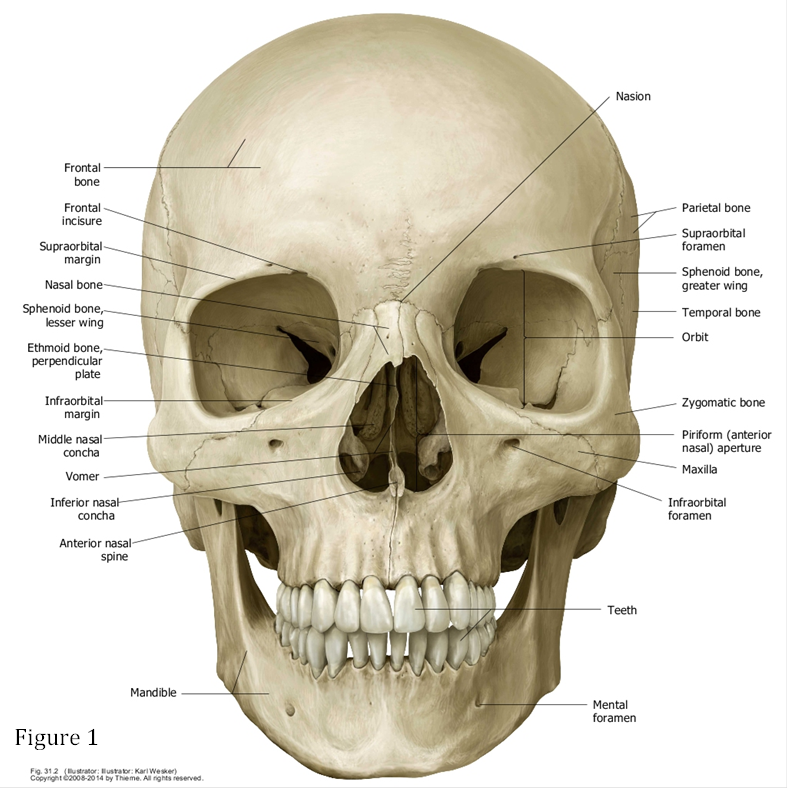
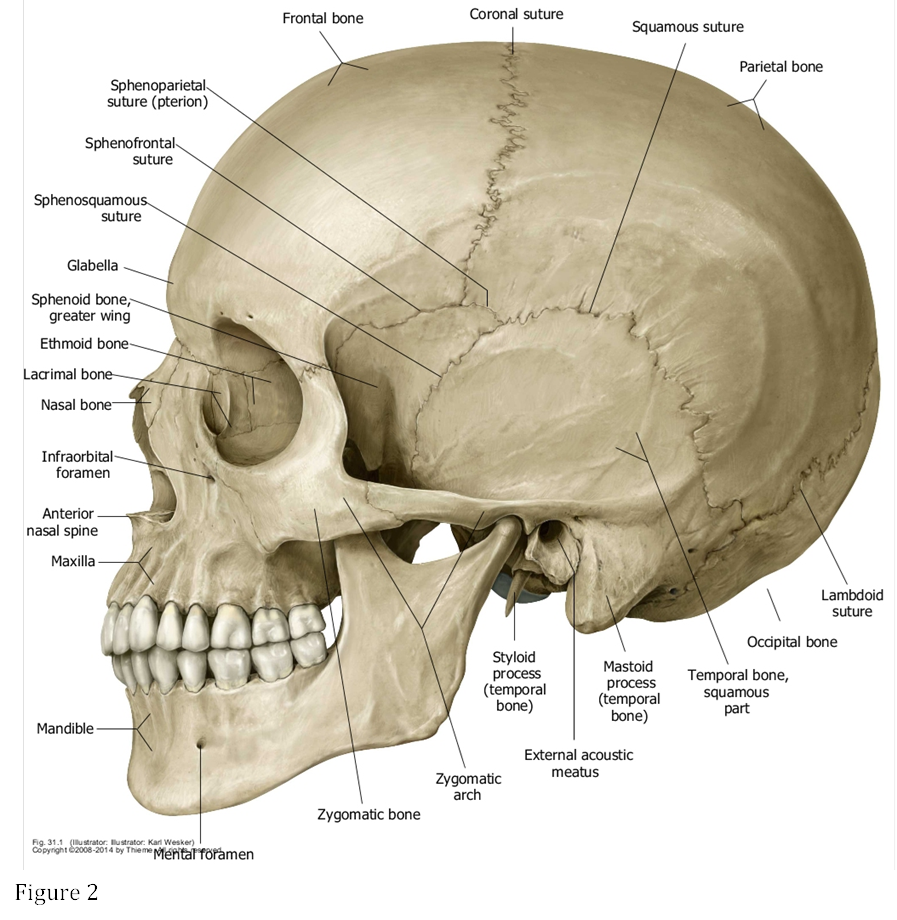
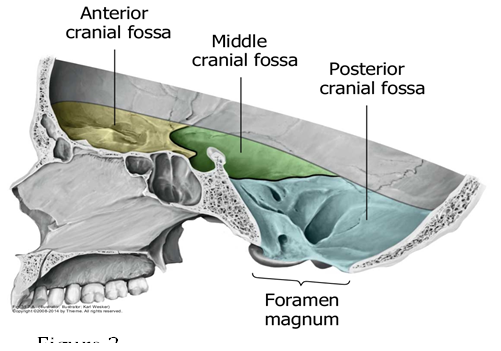
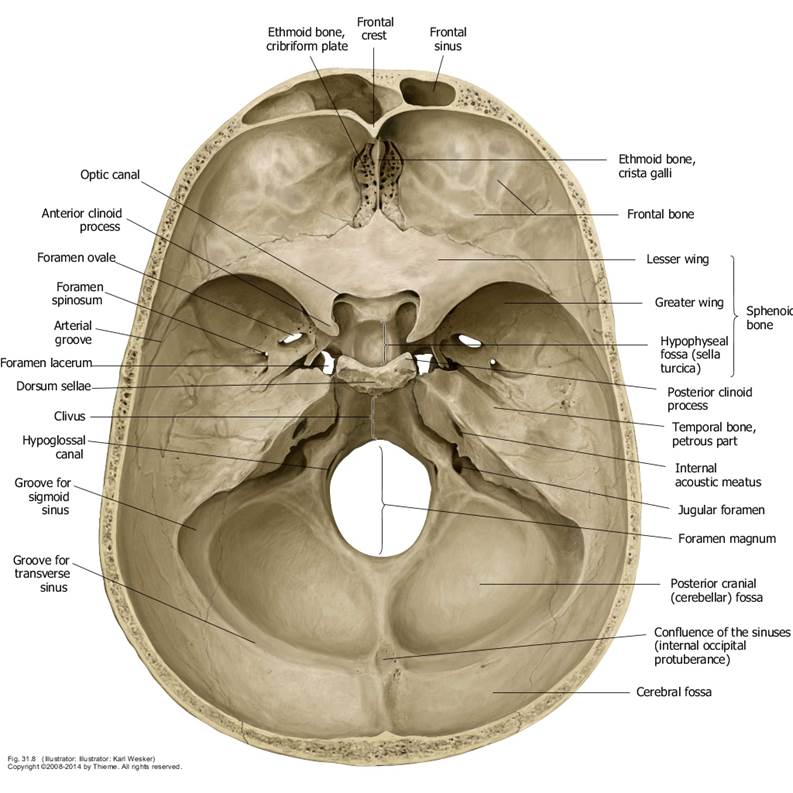
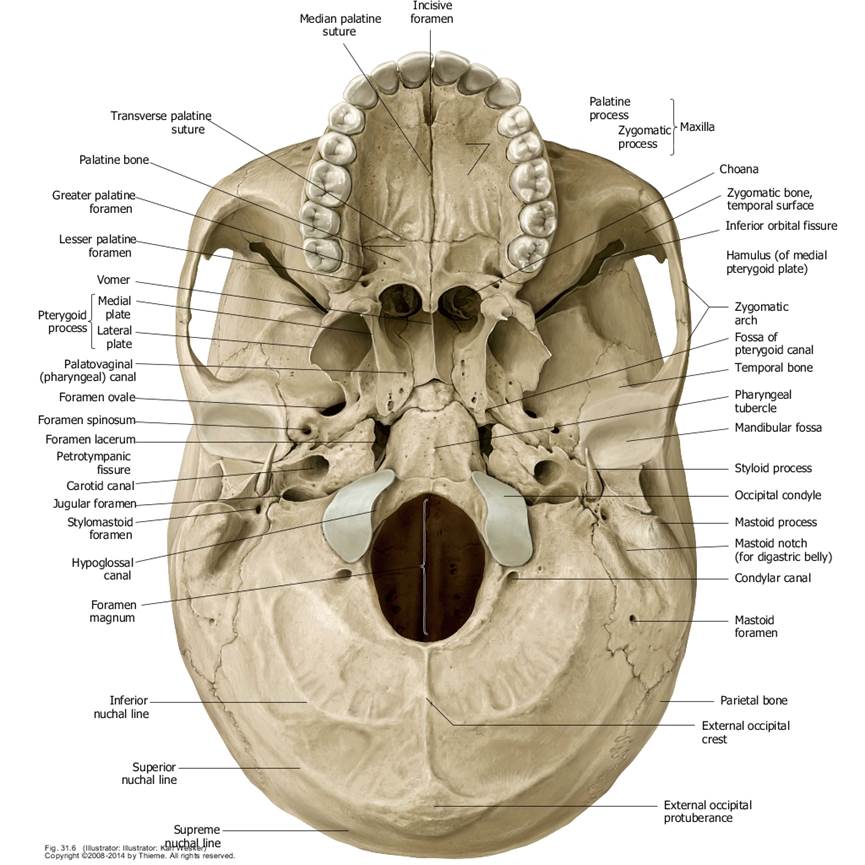
OCCIPITAL BONE
- foramen magnum
- occipital condyles
- pharyngeal tubercle
o external occipital protuberance
o hypoglossal canal, for the hypoglossal nerve (CN XII).
o jugular foramen
o foramen lacerum between the occipital, temporal, and sphenoid bones. This "foramen" is covered by cartilage during life
o sigmoid groove contains the sigmoid sinus
o transverse groove for the transverse sinus
SPHENOID BONE
o greater and lesser wings of the sphenoid bone.
o hypophyseal fossa (space)
o sella turcica (bones making up the hypophyseal fossa)
o dorsum sellae
o clivus
o clinoid processes (anterior & posterior)
o optic canal
o superior orbital fissure
o Foramen rotundum
o Foramen ovale
o Foramen spinosum for the middle meningeal artery.
o carotid canal and the carotid groove
o pterygoid processes
o medial and a lateral plate with a pterygoid fossa
o hamulus
o pterygoid canal pterygopalatine fossa (sphenopalatine fossa).
o pterygomaxillary fissure)
o inferior orbital fissure
FRONTAL BONE
o supraorbital notch/foramen
o zygomatic process
o groove for the superior sagittal sinus.
5. PARIETAL BONES
o Internally, note the grooves for the middle meningeal artery.
6. ETHMOID BONE
o cribriform plate
o crista galli.
o orbital surface (lamina) of the ethmoid.
o superior and middle nasal conchae, and the perpendicular plate.
7. TEMPORAL BONES
o Zygomatic process,
o zygomatic arch
o Styloid process
o mastoid process.
o mandibular fossa.
o bony portion of the auditory tube
o carotid canal,
o stylomastoid foramen
o groove for the middle meningeal artery internal auditory (acoustic) meatus
o external auditory meatus.
o petrous ridge
8. THE ORBIT
o frontal bone.
o ethmoid
o sphenoid bone
o optic canal
o superior and inferior orbital fissures.
o Follow the infraorbital groove across the maxillary bone on the floor of the orbit.
o zygomatic bone
o lacrimal bone
o fossa for the lacrimal sac.
9. PALATINE BONES
NOTE: Be aware that the paired palatine bones consist of horizontal and vertical plates. Only the horizontal plate, that forms the posterior portion of the hard palate, is readily visible in the complete skull.
o major (greater) and minor (lesser) palatine foramina of the palatine bones.
10. MAXILLAE
o infraorbital groove in the floor of the orbit. Anteriorly, this groove becomes the infraorbital canal. This canal opens anteriorly as the infraorbital foramen.
o palatine processes
o incisive foramen
11. MANDIBLE
o body and a vertical ramus.
o angle of the mandible
o condylar process posteriorly and a coronoid process anteriorly.
o alveolar process
o mandibular foramen
o mental foramen
Self-quiz questions:
o What structure passes through the optic canal? (This one is a freebie!)
o What structure(s) pass through the internal auditory meatus?
o What structure(s) pass through the jugular foramen?
o The pterion is made up of what structures?
o V2 (maxillary branch of the trigeminal n) passes through what foramen?
o The foramen lacerum is anterior / posterior to the internal auditory meatus?
o Name 5 bones that make up the orbit
o Which of the following foramen can be seen from the interior (superior view of base of skull), but not the exterior (inferior view of base of skull)?
§ Foramen magnum
§ foramen spinosum
§ foramen rotundum
§ jugular foramen
o Which of the following foramen can be seen from the EXTERIOR but not the INTERIOR of the skull? (more than one of these is correct)
§ Hypoglossal canal
§ Stylomastoid foramen
§ External auditory meatus
§ Inferior orbital fissure
§ Infraorbital foramen
§ Jugular foramen
o Which bone(s) are not part of the nasal cavity?
§ perpendicular plate of the ethmoid
§ vomer
§ inferior nasal conchae
§ superior nasal conchae
§ frontal bone
§ palatine bone
§ zygomatic bone